• Skip to main content
  • Skip to primary sidebar
  • Skip to footer

JOIN ME ON

  • Bloglovin
  • Facebook
  • Instagram
  • Pinterest
  • Twitter
  • YouTube

HoJo's Teaching Adventures, LLC

Fun, Engaged, Impactful Relationships & Learning

I LOVE FREE THINGS!

  • Home
  • Shop
    • My Account
    • My Downloads
    • My Cart
    • Checkout
  • Blog
  • About HoJo
  • Email

TEST

TEST

Leave a Comment

Our Students Needs Hands-on Time with Manipulatives!
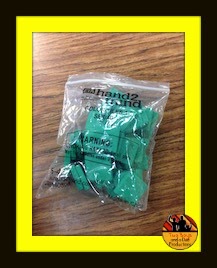
Our Students Needs Hands-on Time with Manipulatives!

Manipulatives
Break out those manipulatives!

Now that the majority of the states have adopted and implemented the Common Core State Standards (CCSS) for Mathematics, we have been promised that there will be less concepts to teach while having more time to teach a concept in depth so that children can develop these deep understandings of the concepts.  Ok.  Hmmm.  Yeah.  So now what?  Is this the reality in your classroom?  Do you really spend more time deeply developing understanding of number concepts? Multiplication? Area? Regrouping? Not I, said the third grade teacher!  Instead…and I speak for myself…we have been given a math curriculum that does indeed cover less concepts, but has many more lessons to teach which barely fit into a pacing guide that would do the Inquisition proud.


Now, carefully read the following:
“A page of abstract symbols, no matter how carefully designed or simplified, cannot involve the student’s senses in the way actual materials can. Symbols are not the concept. They are only a representation of the concept and as such are abstractions describing something which is not visible to the student. Materials allow the child to manipulate objects to gain a full understanding of the concepts behind the abstract symbols. Understanding a concept, as opposed to memorizing it, allows the child to construct meaning. Meaning makes concepts useful to the child. Memorizing as a main teaching tool is only useful in training parrots.”
These words come directly from the Center for Innovation in Education.  The center was founded by Mary and Bob Baratta-Lorton, the developers of the Mathematics Their Way and Mathematics a Way of Thinking curricula and resources.  I was trained in Math Their Way, way, wayback in the 90s.  Much of the educational philosophy of the program was based on Jean Piaget’s ground breaking work on children’s cognitive development.  I was so excited to implement a way of teaching math that made not only sense to me, but to my students.  

Though I now teach third grade, back in the 90s I had taught 1st grade for 7 years.  Most of those years I used the Math Their Way curriculum.  For those unfamiliar with Math Their Way, it is a program that uses everyday materials and classroom manipulatives to build conceptual understanding before moving to abstract symbols and problem solving.  There are 3 levels of teaching:  concrete or concept, connecting and then symbolic level.  When teaching a new concept about 50-70% of the time was spent on the concrete or concept level. Another 30% was spent on the connecting level and the remainder on the symbolic level. 
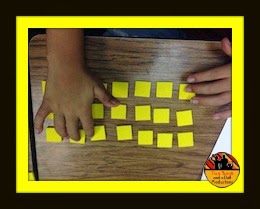
Student working at the concrete level.
My fondest memories of those first graders were watching them rotate through stations using manipulatives and materials to find combinations that would add up to a certain number.  They spent many, many weeks using unifix cubes, beans, buttons, lids, plastic jewels and many other such items.  I remember working one on one or in small groups at each station with children and teaching them to now record their combinations by adding symbols to their pictures, which is the connecting level in Math Their Way.   Once the students could connect their creations to symbols, it was now time to introduce the workbook and start doing some basic arithmetic.  You would not believe how fast those first graders could add!  They already had internalized all the combinations in addition.  Subtraction was also easier to teach, because from their point of view, it was just the other number that was missing that made up the combination.
Now fast forward to 2014, the CCSS,  and how to incorporate the Piagetian philosophy of teaching and the use of manipulatives.  Of course, I am also required to use the district adopted Go Math mathematics program which has a pacing guide that has most of the teachers stressed out.  I’ve tried to marry the two with some success.  Recently, we have gone through 2 chapters of multiplication.  The first chapter dealt mostly with the concept of multiplication.  In this chapter, I spent about 60% of the math period (which runs for about 70 minutes) having the students

use manipulatives to solve problems relating to multiplication.  I used the foam tiles or link cubes that were supplied with the Go Math program to teach equal groups, arrays, Commutative Property of Multiplication, and lots of multiplication related vocabulary.  You can read my blog entries about this process here.  But what I would like to emphasize is that if I had followed the Go Math teacher’s manual, the students would only have been drawing equal groups, drawing arrays and just memorized
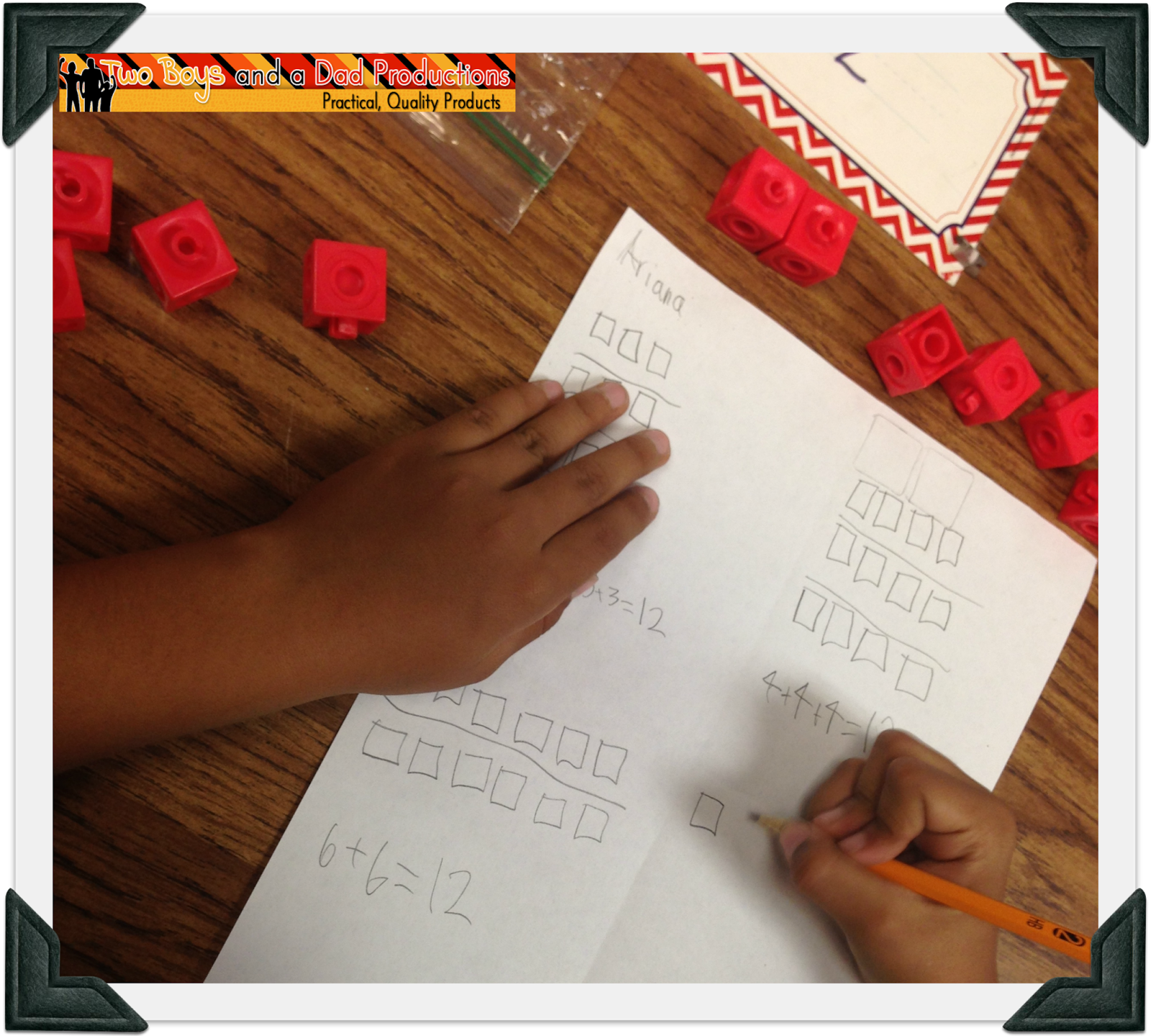
Student working at the connecting level.

multiplication.  Worse, I could have used their online interactive math book that uses cute characters to virtually explain the concepts.  The difference in learning with an actual object in your hand that you can manipulate, rotate, group, stack, move around, count, etc., is 100 times more powerful than just drawing it or watching a cute bunny do it on the screen.  So many times our students do NOT interact with their environment because they are too busy manipulating virtual reality on a video game, or iPad app, or on the computer.

In order to effectively incorporate the use of manipulatives into lessons, I made the following compromises or changes:

  • Use the same manipulatives (such as the foam tiles).  If you change to a new manipulative, the students will want to play with it first taking away valuable instructional time.  
  • When introducing a manipulative for the first time, you really do need a 10-15 minute block for the students just to “play” with the manipulative and get it out of their system.
  • Make handing out the manipulatives easy.  Make a baggy for each child to store the manipulative.  Makes for easy clean up and quick storage
  • Assign manipulative monitors to scan the floors for missing tiles or other manipulatives.
  • Once students were done with the manipulatives, I did not assign full pages of work from the workbook.  Instead I chose about 8 problems with a mix of the arithmetic and related problem solving.  You will know if they got it or not with just those 8 problems.  Doing this means you don’t need 20-30 minutes of independent work time, maybe just 10.  That gives you more time to use the manipulatives.
  • In one lesson, I started with the concrete (students exploring and using the manipulatives to solve math related problems), to the connecting level (this is the part in which I guided the students to add symbols and words to their work with the manipulatives) and ended with the abstract level (students work independently in their workbook).
  • I did NOT use the manipulatives to actually teach a concept.  Instead I presented the students with a problem to solve using the manipulatives.  Most of us are familiar with the gradual release of responsibility model (I do, we do, you do).  I have reversed that to You do, You all do, We do.  You can read more about this on my blog entry for the Japanese Lesson Study mode
This child has a deeper understanding of multiplication.

End in the end I am happy with what I am doing because I am seeing great results with my students.  I truly believe that they have developed deeper understandings about what multiplication is and is not.  I believe that as teachers we need be given the opportunities to use methods that match a child’s cognitive abilities related to age.  If we want the CCSS to succeed, we need to push for more hands-on time and less paper and pencil tasks.  If we want the CCSS to succeed, we need to invite administrators and decision makers into our classrooms so they can see the hands-on learning in person.

Thank you for reading my guest blog entry.  I have been an educator for almost 30 years in the public school system in California. I have served as a mentor teacher, Bilingual Resource Teacher and Literacy Coach. I have taught adults at the university level. I have been teaching third grade for the past 10 years. I have never stopped learning how to improve my teaching. I have in grades 1 – 4, though mostly in third. I have been a staff developer as well as, teaching university graduate students.  You can contact me or follow me directly here:
Email:  [email protected]
Blog:  http://twoboysandadadteacher.blogspot.com
TpT Store:  http://www.teacherspayteachers.com/Store/Two-Boys-And-A-Dad-Productions

Pinterest:  http://www.pinterest.com


Filed Under: 1st grade, 2nd grade, 3rd grade, 4th grade, 5th Grade, 6th grade, Common Core, guest blogger, kindergarten, math

Previous Post: « Christmas Song Titles Game
Next Post: Characterization – Reading for the Clues »

Reader Interactions

Leave a Reply Cancel reply

Your email address will not be published. Required fields are marked *

Primary Sidebar

Best Sellers

Connect with Me

Bloglovin Facebook Google + Instagram Pinterest Twitter YouTube My TPT Shop Image Map

My Personal Blog

FUN. ENGAGING. IMPACTFUL.

click to explore the many amazing resources so many kids have already enjoyed!
Learn More

Footer

Thank you For Visiting!

  • Home
  • Shop
  • Freebies
  • Contact
  • Bloglovin
  • Facebook
  • Instagram
  • Pinterest
  • Twitter
  • YouTube

SUBSCRIBE TO OUR NEWSLETTER

Sign up and get addition freebies delivered directly to your inbox!

  • Privacy Policy
  • Shop
  • Freebies
  • Contact

Copyright © 2021 · BRANDING + WEB DESIGN BY LAUGH EAT LEARN

This website uses cookies to improve your experience. We'll assume you're ok with this, but you can opt-out if you wish.Accept Read More
Privacy & Cookies Policy

Privacy Overview

This website uses cookies to improve your experience while you navigate through the website. Out of these, the cookies that are categorized as necessary are stored on your browser as they are essential for the working of basic functionalities of the website. We also use third-party cookies that help us analyze and understand how you use this website. These cookies will be stored in your browser only with your consent. You also have the option to opt-out of these cookies. But opting out of some of these cookies may affect your browsing experience.
Necessary
Always Enabled
Necessary cookies are absolutely essential for the website to function properly. This category only includes cookies that ensures basic functionalities and security features of the website. These cookies do not store any personal information.
Non-necessary
Any cookies that may not be particularly necessary for the website to function and is used specifically to collect user personal data via analytics, ads, other embedded contents are termed as non-necessary cookies. It is mandatory to procure user consent prior to running these cookies on your website.
SAVE & ACCEPT